

Iqbal’s Experiential Realism

Iqbal, Intuition, and the Future of Reason: How Experiential Realism Bridges Science, Religion, and the Human Soul
Iqbal’s Experiential Realism and the Western Foundations of Reason
Why billions still believe—and why modern psychology may finally be catching up to Iqbal
By Nasir Gill
There are moments in a human life when logic suddenly feels too small—when a grief cracks open the heart, or a prayer whispered at midnight seems to answer itself. In these moments, the universe does not arrive through syllogisms; it arrives through experience.
This, Iqbal insisted, is not an illusion. It is knowledge.
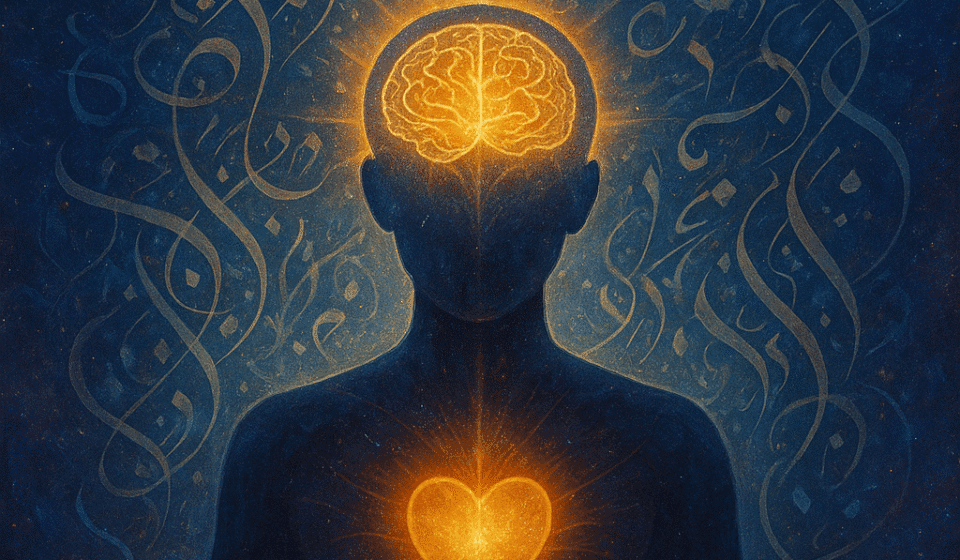
His central methodological principle— Experiential Realism—claims that religious intuition is not a poetic fantasy or primitive instinct. It is a mode of knowing , rooted in lived experience, and capable of being disciplined, tested, deepened, and reconstructed by reason. For Iqbal, intuition and reason are not enemies; they are two wings of the same bird.
Today, as modern psychology probes the mysteries of consciousness, and billions continue to find meaning in faith despite the global rise of rationalism, Iqbal’s voice feels uncannily prophetic. He steps into a debate shaped by giants—Socrates, Aristotle, Descartes, Kant, Spinoza, Hume—and gently turns the conversation:
“Reason alone cannot hold the entire sky.”
The Western Foundations of Reason—and Iqbal’s Creative Rebellion
Western philosophy has long treated reason as the sovereign ruler of truth. Socrates’ dialectics, Aristotle’s logic, Descartes’ clear ideas, Kant’s categories—all build a fortress of rationality where knowledge must pass through the gates of analysis. Even Hume’s skepticism, though critical, still plays by reason’s rules.
Iqbal studied these minds with admiration.
But he saw what they could not see.
The Western project of reason focused on the observable, the measurable, the intellectually graspable. It built extraordinary sciences, ethical systems, and political philosophies. Yet it also created an inner exile, pushing religion into a corner labeled “private belief” and intuition into a drawer named “subjective.”
Iqbal challenged this quietly—but radically.
Where Western philosophers began from mind, Iqbal began from experience.
Where they sought certainty through concepts, he sought intimacy through encounter.
Where they fixed reality in abstract categories, he saw reality as a living, evolving flame.
In Reconstruction of Religious Thought in Islam, he argues:
Reality is not a frozen structure; it is a dynamic, unfolding process.*
To know it, the human self must use both the lamp of reason and the lightning of intuition.
Khudi: Not the Beginning, but the Outcome
Many people assume Khudi—Iqbal’s celebrated concept of the empowered self—is his starting point. But Iqbal is subtler.
Khudi is a product of experiential realism, not its foundation.
It emerges only when the individual learns to see reality through:
- disciplined introspection
- authentic spiritual experience
- critical intellectual reconstruction
- moral action
Reason shapes the structure of Khudi, but intuition gives it soul.
Western thought often separates the two:
Reason is “objective,” intuition is “subjective.”
Iqbal refuses this divorce.
For him, intuition is not a vague feeling—it is a mode of perception, refined through prayer, reflection, surrender, and self-awareness. Reason is not a tyrant—it is a tool for verifying, articulating, and deepening what intuition reveals.
Like Rumi, Iqbal believes the heart has a logic the mind has not yet learned.
Like Kant, he believes in limits—but for him, the limits of reason open the door to higher possibilities, not barriers to them.
Why Billions Still Believe: A Global Human Insight
Despite centuries of scientific triumphs and philosophical skepticism, more than 5 billion people identify with a religion. Many intellectuals ask: Why?
Iqbal answers:
Because the human being is not a machine of logic; it is a seeker of meaning.
Reason can explain the orbit of planets but not the trembling of a heart in gratitude.
It can describe neurotransmitters but not the fullness of compassion.
It can measure the brain but not the soul’s longing for transcendence.
Iqbal does not reject science; he places it within a larger human story.
He argues that religions endure because:
- they speak to the moral imagination
- they provide existential grounding
- they awaken inner experience
- they connect the self with a larger purpose
- they nourish intuition, which reason alone cannot satisfy
This is not superstition.
This is human architecture.
Even when religious institutions become dogmatic or rigid, the inner spiritual quest remains alive. That quest, Iqbal says, is not irrational—it is a deeper form of rationality.
Is Modern Psychology Approaching Iqbal?
Measuring intuition… and proving it matters
This is where Iqbal becomes astonishingly modern.
Contemporary psychology and neuroscience—fields built on strict scientific methodologies—are now investigating forms of knowledge strikingly similar to what Iqbal describes:
- intuitive cognition,
- embodied knowing,
- peak experience (Maslow)
- flow states, (Csikszentmihalyi)
- mystical experience metrics, (Griffiths, Hood)
- heart-brain coherence research, interoception and emotional intelligence, meditation neuroscience and prayer-induced neuroplasticity,
Scientists increasingly acknowledge that intuition is not fantasy—it is a measurable cognitive process, rooted in pattern recognition, subconscious processing, emotional intelligence, and deep attentional states.
Brain imaging shows that:
- meditative intuition activates integrative networks
- spiritual experience correlates with increased coherence and creativity
- intuitive decisions can outperform logical ones in complex situations
- mystical experiences profoundly reshape long-term psychological well-being
This is precisely what Iqbal meant when he said intuition is “a mode of knowledge grounded in experience.”
Modern psychology is catching up.
Where Freud saw religion as neurosis, contemporary psychology sees it as:
- a resilience enhancer
- a meaning-making system
- a builder of emotional coherence
- a catalyst for transformation
The line between spiritual experience and cognitive science grows thinner every year.
Iqbal’s intuitionist realism was not mystical escapism—it was early cognitive insight.
A World in Need of Both Wings: Intuition and Reason
In our global moment—of political division, moral exhaustion, technological anxiety, and spiritual hunger—human beings are searching for balance.
Some cling only to reason and feel spiritually homeless.
Some cling only to religion and fall into dogma.
Iqbal points toward a middle path:
“Reason is the lamp we carry;
intuition is the horizon we walk toward.”
Human knowledge collapses without either.
He calls for:
- religion without rigidity
- spirituality without superstition
- science without arrogance
- reason without coldness
- intuition without chaos
This equilibrium is not just philosophical—it is psychological, ethical, and civilizational.
The Great Storyteller of the Human Self
To ordinary people across the world—Muslims, Christians, Hindus, Buddhists, spiritual seekers, and even skeptics—Iqbal speaks like a storyteller:
He tells the farmer that his prayer at dawn is a mode of knowledge.
He tells the engineer that his insight in a moment of silence is intuition’s spark.
He tells the grieving mother that her strength is not irrational—it is spiritual cognition.
He tells modern humanity:
You are more than a machine of neurons. You are a self in motion, a consciousness evolving, a participant in the creative unfolding of reality.
Conclusion: The Future Belongs to the Integrated Mind.
If the 19th century belonged to logic, and the 20th to science, the 21st may belong to integrated consciousness—where intuition and reason finally reconcile.
Iqbal’s experiential realism is not a relic; it is a map.
- It affirms religion without denying science.
- It restores intuition without rejecting reason.
- It offers dignity to billions who live by faith.
- It welcomes modern psychology as an ally.
- It invites the world to think, feel, and experience more deeply.
And perhaps this is why Iqbal’s voice continues to rise—because he speaks to the ordinary human heart, the global soul, the seeker in every person who asks:
“What is the meaning of my life, and how do I truly know?”
Iqbal answers with a smile:
“Know with your mind.
Know with your heart.
And let both wings carry you home.


Show CommentsIt’s a very thoughtful and prudent article, it seems writer tried hard to convince the PPl about nature keep it up bro
Marvelous piece of work,i
Excellent piece of work.
Brilliant exposure of veiled links between Iqbal’s Philosophy and modern Quantum Physics, love it!
Brilliant exposure of veiled links between Iqbal’s Philosophy and modern Quantum Physics, love it!
Thanks for your comment, and I look forward to your suggestions.
This is a brilliant exploration of Iqbal’s epistemology. Your analysis beautifully captures how he transcends the false dichotomy between reason and intuition. His metaphor of intellect as a “street light” that illuminates but doesn’t accompany us to the destination is particularly profound—acknowledging reason’s role while recognizing its limits in grasping Ultimate Reality.
Excellent
Keep it up
It’s a excellent essay to understand The subject and writer motive
Excellent work on this thought-provoking essay, Your analysis of Iqbal’s experimental realism and intuition is insightful❤️
Thanks for your comment, and I look forward to your suggestions.
I wanted someone to talk about it, and I found your article.
Thanks for your comment, and I look forward to your suggestions.
Article is too interesting and also written in prudent manner way of thinking is outstanding
Thanks for appreciating the article. Your comment is a real lifeline for the platform.