

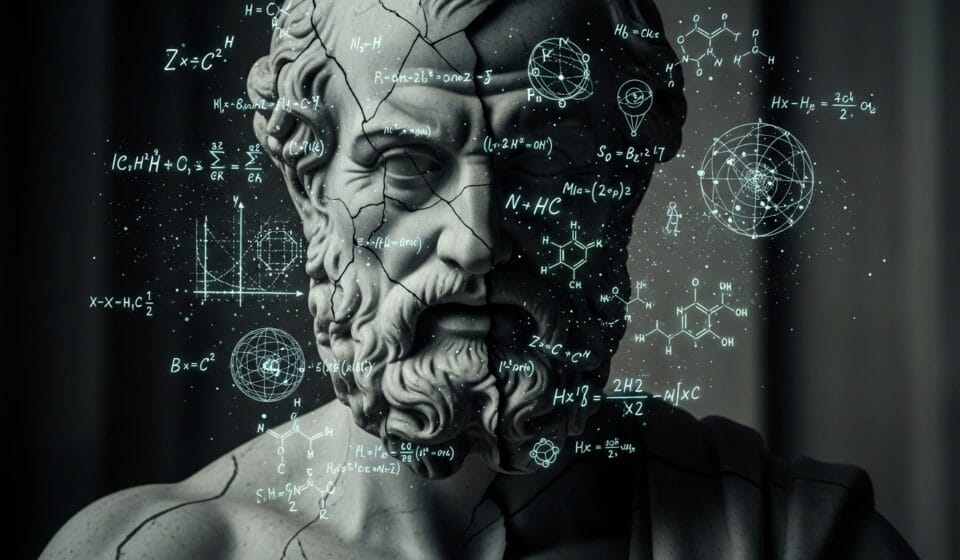
Is Philosophy Dead Like Nietzsche’s God?

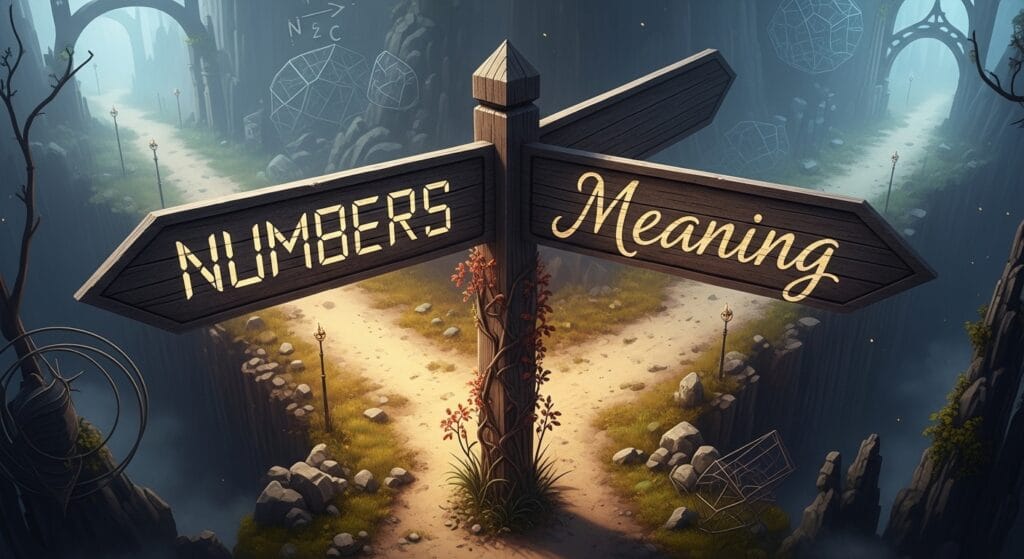
The Tyranny of Numbers
To rethink philosophy in the age of science is widely dismissed as a non-starter. Philosophy is declared dead not because it failed, but because it refuses to be reduced to numbers. In an age ruled by instruments and precision, its questions of meaning are deemed excess, its wisdom downgraded to taste, its slow light eclipsed by empirical glare. What cannot be measured is judged irrelevant. In a civilization intoxicated with numerical precision, philosophy appears an antique voice—too slow for acceleration, too reflective for results.
Philosophy at the Edge of Science
Is philosophy dead like Nietzsche’s God? Has it lost its epistemic appeal? The roar of scientific success seems to have subdued the quieter voice of wonder, leaving us rich in numbers yet poor in meaning. This unease is not confined to philosophers alone; it touches ordinary men and women who think before they calculate, feel before they verify, and learn intuitively before they prove. The question is stark: will philosophy withdraw into silence before science, or rise again to reclaim its dignity by restoring meaning to knowledge?
Burying Philosophy is an Old Habit
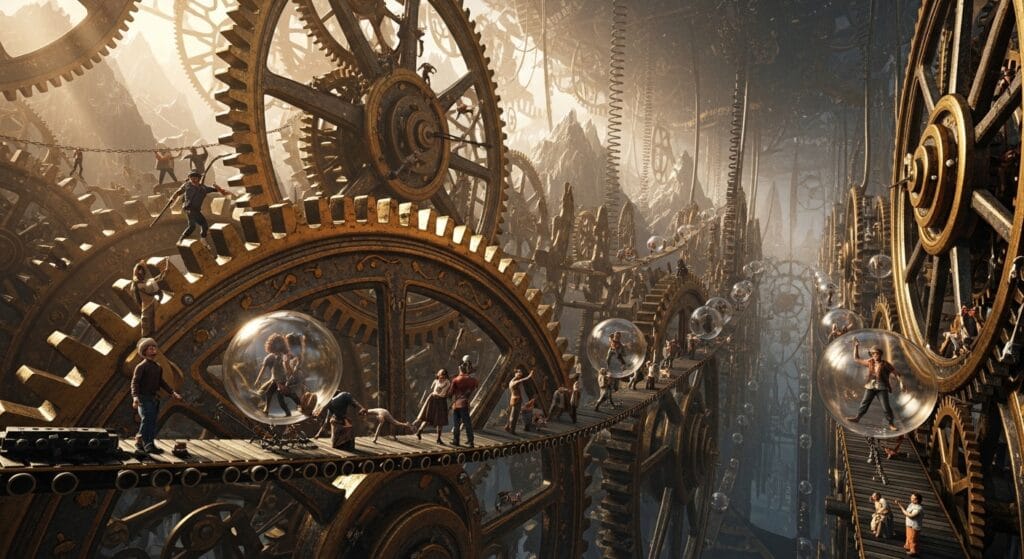
Philosophy has been most confidently pronounced dead at the very moments when it was merely unheard. Each age, dazzled by its own instruments, quietly delivered the verdict. When theology reigned, philosophy was reduced to a handmaiden; when science ascended, it was dismissed as obsolete. Our own age repeats the judgment, armed with newer machinery and the same old haste—proving once again that the history of philosophy, like the seasons, returns in recurring cycles rather than vanishing into time.
The Fall of the “Supernatural”
The supernatural once meant not a violation of nature, but what rose above it. Medieval thinkers embraced the word without embarrassment, seeing nature as layered and incomplete. This medieval horizon contracted when wonder yielded to measurement and nature was sealed within determinism. So, reality was reduced to what could be measured. Over time, “supernatural” came to signify not higher reality but doubtful reality—wonder translated into suspicion. What was once a language of depth became, in the age of calculation, a polite way of saying: this need not be taken seriously.

This transformation was not the result of science alone, but of a philosophical decision.
The Abdication Of First Questions
The marginalization of philosophy did not arise from science alone but from philosophy’s own retreat. After Galileo turned truth toward the telescope, philosophy grew suspicious of its ancient voice. Bacon reduced it to the handmaid of experiment; Hobbes permitted dignity only when it marched like geometry; Locke emptied the mind into sensation; Hume dissolved causality, self, and God into habit; Comte dismissed philosophy as a childish stage to be outgrown by science. Philosophy was not conquered by science—it was narrowed by philosophers who mistook measurement for reality.
The Demise or Surrender of Philosophy
Philosophy did not perish in the twentieth century; it fractured. One wing bent toward the laboratory, surviving as science’s quiet clerk. Logical positivism emptied metaphysics of meaning; Carnap dismissed it as nonsense, Quine naturalized reason itself, and later Dennett and the Churchlands recast mind, self, and will as puzzles awaiting neurological solution. Philosophy endured here as method without vision—a grammar of facts rather than a song of truth.
Age Of Scientific Fatalism
The modern enthronement of physicalistic determinism has transformed science into a quiet fatalism, persuading our age that reality is a sealed mechanism and the future already spent. In reducing freedom to illusion and creativity to chemistry, it has rendered philosophy redundant and imagination suspect. Once philosophy loosened its grip, science—forgetting its metaphysical debts—struck a decisive blow against synthesis, that inward power by which mind and world cohere. Yet it was this very synthesis, rooted in spirit and vision, that enabled humanity to resist necessity, endure suffering, and wrest meaning from indifferent nature. Determinism may explain how we persist, but only freedom explains why survival has ever mattered.
Philosophy: A Definition as Vast as Life
Philosophy has never been one thing because life has never come from one direction. To Socrates, it was the examined life; to Plato, the soul’s ascent from shadow to form; to Aristotle, the search for first causes. The Stoics turned it into inner discipline, Epicurus into a remedy for fear; Kant made it reason judging its own limits. For Hegel, philosophy is history coming to self-knowledge, and for Nietzsche, the courage to create values after inherited meanings collapse.
In the East, the Upanishads saw philosophy as identity with the absolute, the Buddha as release from suffering, Confucius as moral harmony, and Laozi as attunement to the unseen order behind appearances. Islamic thought widened the lens: Avicenna shaped it into a science of being, Ibn Rushd defended the sovereignty of reason, Ibn Khaldun read it in the rise and fall of civilizations, and Iqbal transformed it into a call for creative selfhood in a growing universe.
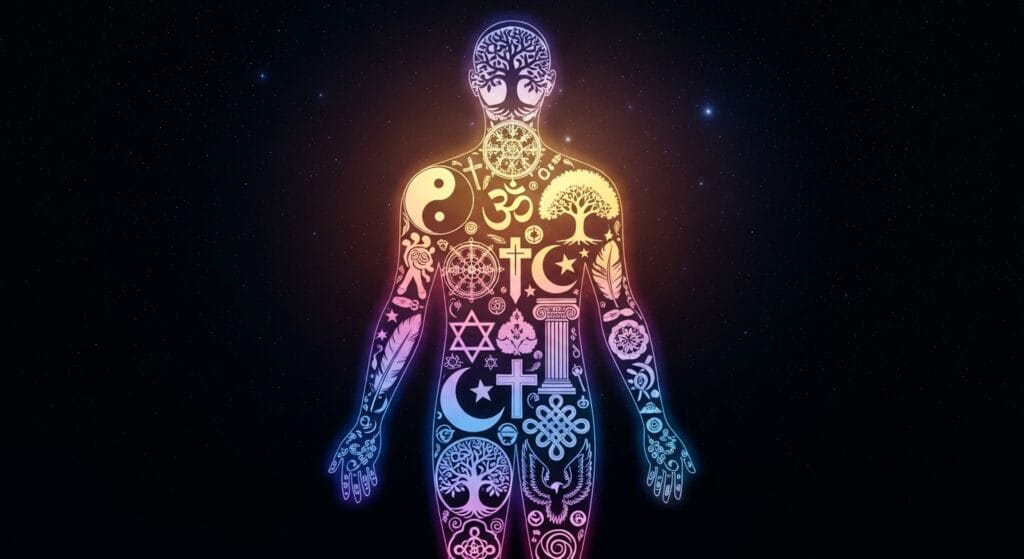
Such diversity is not confusion but capacity. Philosophy is multifunctional because reality assails humanity from every side—material and moral, visible and invisible, actual and imagined. Science advances with admirable precision along a single line; philosophy alone faces the whole, teaching us not merely how the world works, but how a human being may endure and transcend it.
Intuidom’s Definition
“Philosophy is consciousness in motion, weaving intuition and reason into the very fabric of being.”
Philosophy is consciousness in motion, a living thread through the world of experience, tracing the unseen currents of life. It weaves intuition and reason into the very fabric of being, revealing hidden harmonies that guide thought and action. In this quiet union, philosophy becomes both compass and mirror, showing where we are, and the place to which all consciousness ultimately belongs.
Intuidom and the Illusion of Finality
Science has marched into the core of matter, unlocking powers and patterns once sealed to wonder. Yet, in the afterglow of triumph, a familiar murmur declares: philosophy, like Nietzsche’s God, is dead.
Intuidom disputes this verdict—not by denying science, but by restoring it to its proper lineage. Science is not the whole of reality, nor its final interpreter, but its begotten half: born of the conscious self and forever dependent upon it. Philosophy, far from being displaced, remains the measure of the whole—embracing the seen and unseen, the measurable and the lived, the object examined and the subject who examines.
The Intuidom Hypotheses
I. Science as the Begotten Half of Reality
Science is the epistemic offspring of philosophy and lived experience; it measures the visible world, but philosophy measures the whole.
Before laboratories, there were wonderers; before instruments, intuitions. Aristotle’s biology, Newton’s mechanics, Einstein’s relativity—achievements of mind, not accidents of matter. Newton called his work natural philosophy. Science was philosophy disciplined by number; only later did it forget its parentage.
Empiricism narrowed vision. The measurable came to be confused with the real, while meaning, value, and consciousness—the very conditions of science—were dismissed as secondary. This reduction was never justified by science itself. It was a philosophical choice.
II. The Subjective Self as the Measure of All Knowledge
The subjective self, though immeasurable, is the measure of all knowledge—scientific, analytic, or metaphysical.
Every observation presupposes an observer; every equation presupposes a mind capable of meaning. Even the claim that consciousness is an illusion is made by consciousness. Kant showed that space, time, and causality are not discovered within experience but are conditions that make experience possible. Science moves within these structures but does not explain them.
To deny the primacy of the self is to saw off the branch upon which knowledge sits.
Philosophy: The Womb of Science
It was not mathematics that shaped consciousness; it was consciousness that first intuited order and later named it number. Geometry rose from spatial intuition, logic from the hunger for coherence, language from the need to hold meaning in sound. Philosophy works earlier and deeper than science: it asks what is before methods ask how it works. Science sharpens; philosophy first dares to see.

Before Science, There Was Wonder
Before experiment claimed authority, the human mind read the stars, healed the body, and traced harmony in life. In China, the compass found direction, paper preserved thought, and Daoist wisdom named balance long before laboratories. Philosophy is as old as culture itself—older than science, resilient through doubt, now quiet beneath triumph.
What is born of wonder does not perish by measurement; the stars may be counted, but they must first be loved.
III. Philosophy and Science as Complementary Halves
Science refines our grasp of matter; philosophy interrogates reality itself.
Science explains how; philosophy asks why. Science predicts; philosophy evaluates. Science extends power; philosophy restrains it with wisdom. When science claims independence, it unknowingly adopts metaphysical commitments—realism, determinism, physicalism—that are philosophical assumptions.
When Science Meets Its Limits
Science advances magnificently—until it reaches questions it cannot answer with instruments alone: Why is there something rather than nothing? Why is the universe intelligible? Why does consciousness exist at all? At these boundaries, science does not fail; it returns the question to philosophy.
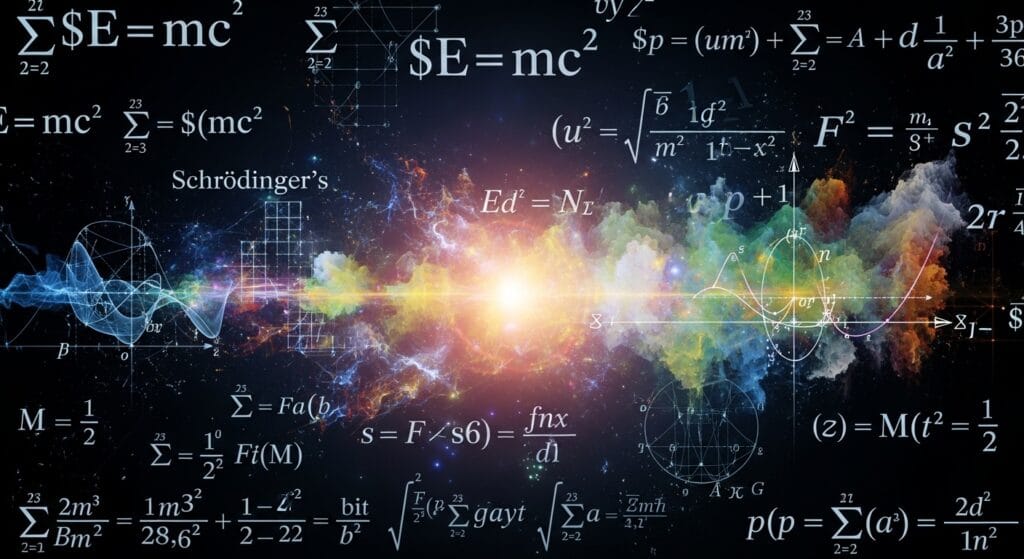
Modern theoretical physics now speaks a language indistinguishable from metaphysics. Multiverses, quantum indeterminacy, the nature of time—these are philosophy written in symbols. As Heisenberg observed, what we observe is not nature itself, but nature exposed to our method of questioning.
Physics is Blind Without Philosophy
At the smallest frontiers of matter, science advances on metaphysical ground it pretends not to see. In the realm of quarks and probabilities, laws thin into theories, measurement yields to inference, and logic must finish what instruments cannot begin. Every stride forward is carried by assumptions about order, causality, and intelligibility—ideas inherited from philosophy. Science may outgrow its parent publicly, yet privately it leans again on that forgotten wisdom.
Philosophy Outlives Triumphs
Despite history’s tumults, from the Greeks to today, philosophy was never wholly abandoned. Leibniz sought the rational harmony beneath facts; Spinoza upheld metaphysics with austere mathematical dignity; Kant revealed that even science rests upon unexamined philosophical ground. Science may master nature, but philosophy endures as the vigilant guardian of meaning.
Philosophy: Architect of Civilization
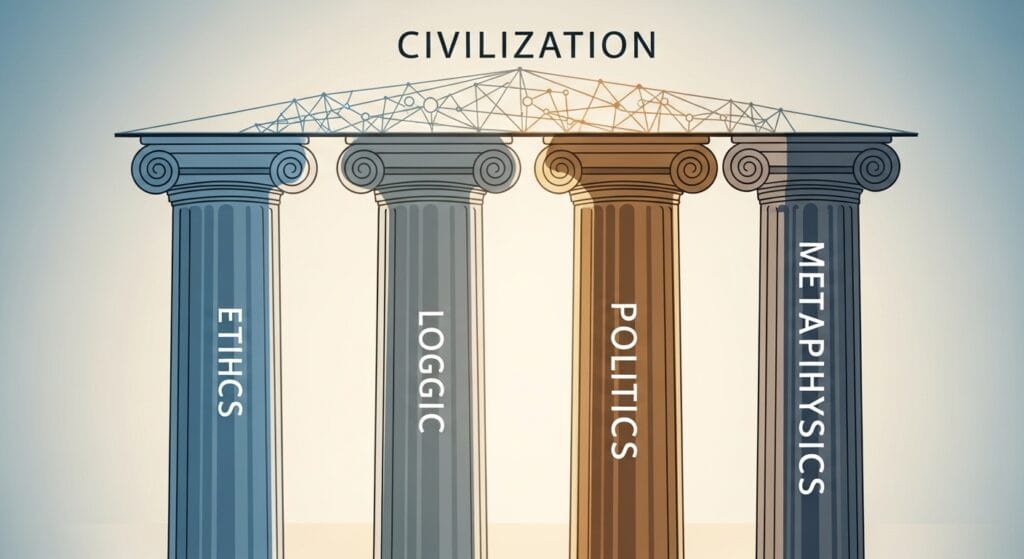
From logic and metaphysics to ethics and politics, philosophy gave civilizations their ends before science perfected their means: Athens democracy before statistics, China moral harmony before sociology, Europe liberty before laboratories. Science multiplies power; philosophy gives conscience.
The Silenced Conscience of Modern Knowledge
Today, in universities across the world, philosophy is honored but scarcely heard. Science commands the funding, the prestige, the future; philosophy is left to memory and margin. In a reductionist age, only what can be measured or used is valued, and billions flow to research that promises utility, while philosophy’s ancient task—questioning ends, restraining power, giving unity to knowledge—goes largely unnoticed. Yet its quiet presence remains, the conscience of learning in a world racing toward results.
Mortals Need Wisdom, Not Power
As the nuclear threat looms and the Doomsday clock hovers near midnight, philosophy must reclaim its central place—not as a luxury, but as an instrument of survival. Science has made humanity powerful, yet morally undereducated—rich in calculation, poor in wisdom. The world needs not a sovereign philosopher, but a unifying philosophical consciousness reminding divided powers of shared mortality and indivisible fate. Only philosophy speaks to humanity as a whole.
Conclusion
Philosophy is not dead like Nietzsche’s God; it has only fallen silent, as in ages past, withdrawing from instruments and calculations to dwell in the subtle currents of consciousness. Yet when bewilderment trails the “enlightened science” of our time—when billions seek meaning, coherence, and hope—philosophy will speak again, not as commentary, but as the living voice of humanity. Always ahead of science, always ahead of its age, it senses the whole before the parts, the destiny before the steps, the life behind the measured world.

When science confronts paradox, meaning, and value, it will turn to its oldest companion. Philosophy will return, not as a relic, but as a guide—quiet, patient, indispensable.
Philosophy was never dead. It was only waiting.
References:
Aristotle. (1984). The complete works of Aristotle (J. Barnes, Ed.).
Plato. (1991). The collected dialogues(E. Hamilton & H. Cairns, Eds.).
Nietzsche, F. (2006). Thus spoke Zarathustra.
Avicenna. (2005). The Metaphysics of The Healing . The Incoherence of the Incoherence.
Ibn Khaldun. (1967). The Muqaddimah: An introduction to history
Bacon, F. (2000). Novum Organum (L. Jardine & M. Silverthorne, Eds.).
Descartes, R. (1985). Meditations on First Philosophy (J. Cottingham, Trans.).
Hobbes, T. (1991). Leviathan (R. Tuck, Ed.).
Locke, J. (1975). An Essay Concerning Human Understanding (P. H. Nidditch, Ed.).
Hume, D. (2007). A Treatise of Human Nature (D. F. Norton & M. J. Norton, Eds.).
Comte, A. (1975). The Positive Philosophy of Auguste Comte.
Kant, I. (1998).Critique of Pure Reason.
Hegel, G. W. F. (1977). Phenomenology of Spirit
Carnap, R. (1934). The Logical Structure of the World.
Quine, W. V. O. (1961). From a Logical Point of View.
Dennett, D. C. (1991). Consciousness Explained. Little, Brown.
Churchland, P. M. (1986). Neurophilosophy: Toward a Unified Science of the Mind–Brain
Upanishads. (1999). The Upanishads (E. Roer & F. Max Müller, Trans.; A. Sharma, Ed.).
Buddhaghosa. (1995). The Path of Purification.
Confucius. (1998). The Analects.
Laozi. (2006). Tao Te Ching (D. C. Lau, Trans.).
Heisenberg, W. (2007). Physics and Philosophy: The Revolution in Modern Science.
Russell, B. (1945). A History of Western Philosophy.

Show CommentsThe question of whether philosophy is “dead” like Nietzsche’s famous declaration that “God is dead” is both intriguing and complex. Wonderful writing and great message. Doing well, intuidom.
Thanks for appreciating comment. Intuidom’s goal is to bridge gap between thought and intuition for coherence in science and metaphysics. Keep following intuidom.
Wao; we need such read to be confident in our understanding towards life of which science is just a component. Well done intuidom
Oh yes, science is just a part not the whole. We need it but for complete picture we need to count on intuition as well beside thought. Thanks for your approving words.
Thanks I love it ❤️
Thanks
The article brilliantly frames philosophy’s “death” as a cultural eclipse by scientific materialism rather than a failure of logic. It correctly distinguishes between measurement (science) and meaning (philosophy), arguing that data alone cannot satisfy our inherent metaphysical hunger. By synthesizing global traditions, the author proves that wisdom is a universal survival instinct, acting as the moral “conscience” to our scientific power. Ultimately, it serves as a sharp reminder that while science describes the world, only philosophy allows us to truly inhabit it.
Thanks.
The article brilliantly frames philosophy’s “death” as a cultural eclipse by scientific materialism rather than a failure of logic. It correctly distinguishes between measurement (science) and meaning (philosophy), arguing that data alone cannot satisfy our inherent metaphysical hunger. By synthesizing global traditions, the author proves that wisdom is a universal survival instinct, acting as the moral “conscience” to our scientific power. Ultimately, it serves as a sharp reminder that while science describes the world, only philosophy allows us to truly inhabit it.
Yes, your view is right on the money. Philosophy is consciousness in motion and science is the begotten child of philosophy. Thanks, keep following intuidom.
I really appreciate your viewpoint. Philosophy is the womb of all knowledge, either intuitive or scientific. keep doing the good work, intuidom.
I appreciate your approving words. Keep following Intuidom.
Philosophy is all about intuition, it can neither be forced to be real, nor can it exist in boundaries.
It keeps itself in another, higher dimension, Only reachable when human’s mind and consciousness knows no limits!!!
A little fluctuation in its setup destroys its existence
( A person can’t be Philosophical while being an experimental object!!)
I appreciate your understanding and concern.keep following intuidom.