

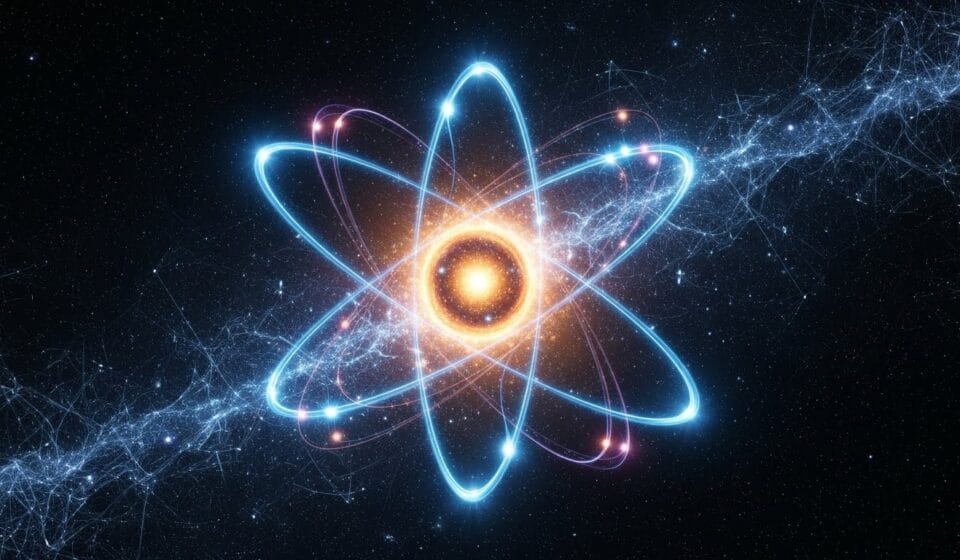
We’re often told that reality is made of matter moving through space and time. It sounds clean, scientific, and settled. But the deeper we look, the less solid that picture becomes.

Physics begins with a simple truth: without space and time, nothing physical can exist. No matter. No motion. No events. Yet modern science now tells us something quietly radical—space and time are not the stage on which reality unfolds; they are part of the performance itself. Time did not exist before the universe. As Stephen Hawking explained, it emerged with the Big Bang. Asking what came before is like asking what lies north of the North Pole.
Even more surprising, spacetime is not rigid. It bends, stretches, and slows. Gravity is not just a force acting inside space and time; it is spacetime responding to matter. And at the smallest scales of existence, space and time themselves begin to flicker and dissolve. They may not be fundamental at all.
When Space and Time Are No Longer Fundamental
Which raises a profound question: if space and time emerge, what are they emerging from?
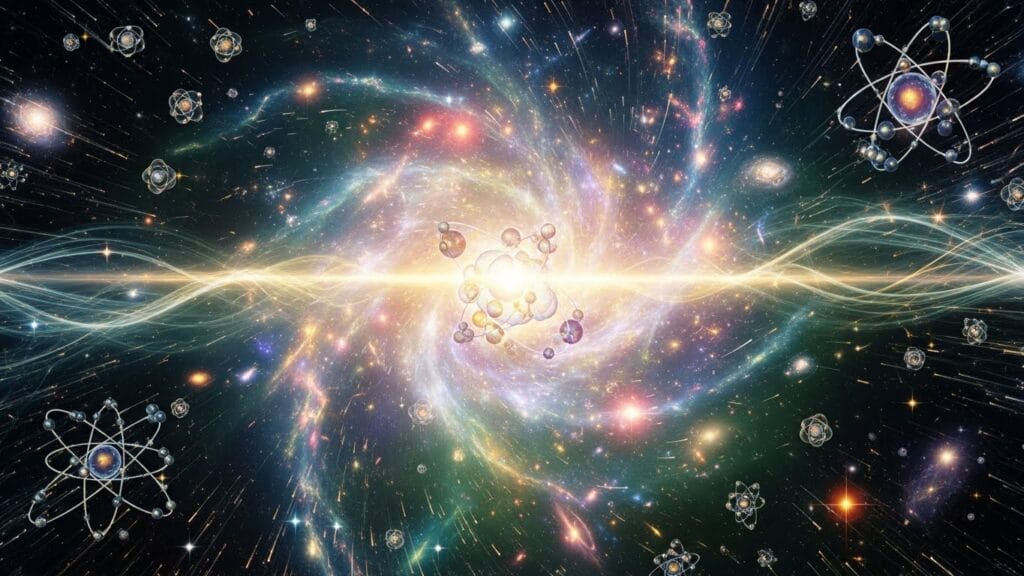
This is where consciousness enters the conversation. Despite astonishing advances in neuroscience and artificial intelligence, awareness itself remains unexplained. Nobel laureate Roger Penrose has argued that genuine understanding cannot be reduced to computation alone. Something essential—our capacity to grasp meaning—refuses to be mechanized.
The same mystery surrounds the universe itself. Why are the laws of nature so finely balanced that stars ignite, chemistry unfolds, and life becomes possible? Science describes how the universe works with breathtaking precision, yet the deeper why remains unanswered.
Faith in an Age of Deeper Science
For believers in God, this is not a threat—it is a good tiding.
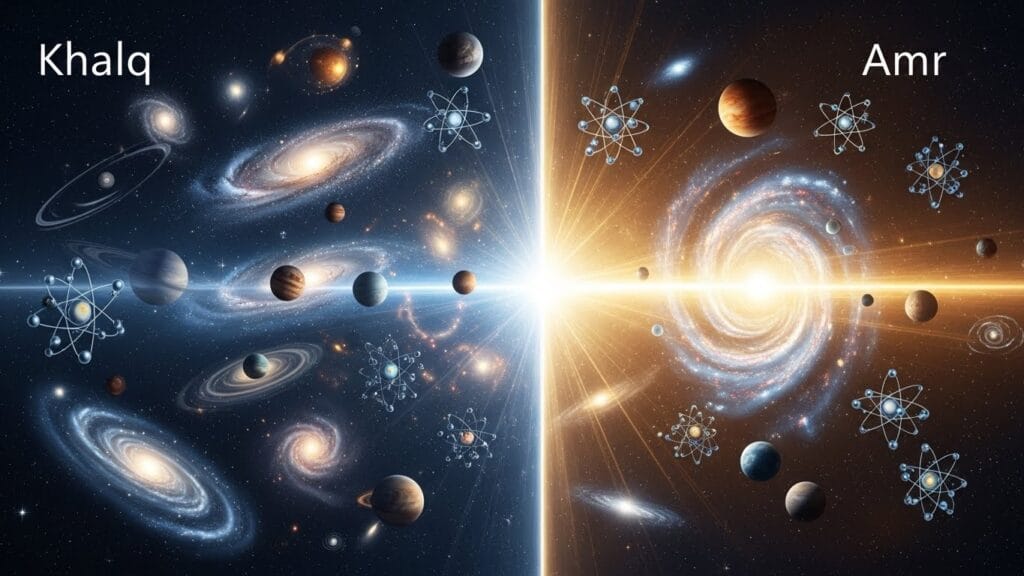
It means that the deeper science goes, the less it undermines faith and the more it quietly echoes it. The Qur’an, for example, distinguishes between Khalq—creation that unfolds through time and physical laws—and Amr, creation by divine command, beyond material causation. One describes the visible universe; the other points to its transcendent source.
Philosophers today are rediscovering similar ideas. Panpsychism suggests that mind-like qualities may be fundamental to reality. Thinkers such as David Chalmers and Thomas Nagel now argue that consciousness may be as basic as space and time. What once sounded “unscientific” is now part of serious academic debate.
For Gen Z—growing up amid climate anxiety, digital overload, and constant uncertainty—this matters deeply. It suggests that the universe is not random, indifferent, or meaningless. It suggests that existence itself is intelligible, purposeful, and open to understanding.
And here lies the strongest reassurance for those who believe in God: faith does not rest on gaps in science. It rests on depth. As scientific explanations expand, they do not erase but seem to confirm God— The creator of all. Science is also revealing how vast reality truly is, and how limited purely material explanations remain.
There are questions no equation can answer: Who am I? Why does love matter? Why does meaning feel real? At this frontier, intuition joins reason—not as blind belief, but as insight rooted in lived experience.
The good news is this: belief in God is becoming more intellectually resilient. The universe increasingly appears not as a lifeless machine, but as a meaningful process grounded in order, awareness, and purpose.
Perhaps the final message is simple yet powerful: faith is not something to defend against knowledge—it is something that grows with it. And for those who believe, the deeper we explore time, matter, and consciousness, the clearer one truth becomes:
Reality has a source.
Meaning is not accidental.
And the Creator remains—not inside the universe, but at its very foundation.




Show CommentsA thoughtful and engaging article that invites readers to reflect deeply on the nature of reality, time, and consciousness. Insightful and well-articulated.
Thanks for your encouraging words. Keep following intuidom.
Well-written and very informative ! I learned a lot from this.Looking forward to reading more from you .
Your valued feedback is an assist of intuidom. Keep following.
This is an amazing article!. I really enjoyed the way you explained .Thank you for sharing your knowledge
Thanks for your comment. Stay with intuidom since there are many ideas to ponder and wonder at in our world.