

Where Does Consciousness Belong?

Intuidom editorial
By. Nasir Gill
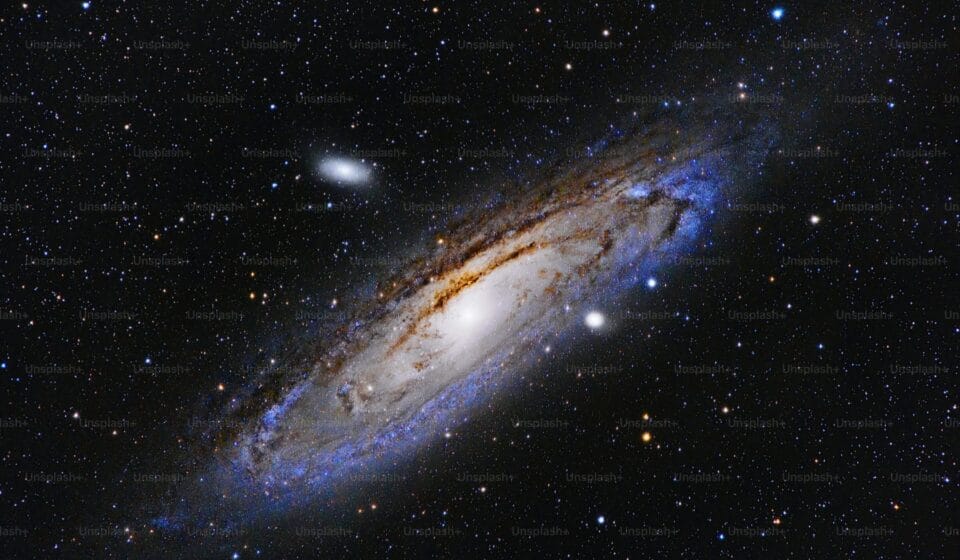
There is a quiet paradox at the heart of modern life. Never before has humanity known so much about the universe, and never before has it been so uncertain about its own place within it. Physics explains how stars are born and how particles behave; biology maps the machinery of life with stunning precision. Yet the most intimate fact of existence—the experience of being conscious—remains stubbornly unexplained.
The Ancient Intuition About Reality
This is not a new puzzle. Long before laboratories and algorithms, ancient civilisations suspected that reality was not merely material. Indian philosophy placed consciousness at the centre of existence; Buddhism treated awareness as the condition through which the world appears; Greek thinkers from Plato onward sensed that appearances might conceal deeper truths. Across cultures, the intuition was similar: reality without consciousness is incomplete.
When Measurement Replaced Meaning
Modern science disrupted this consensus. With the rise of physics and mathematics, explanation became inseparable from measurement. What could not be quantified was gradually sidelined. Consciousness, once central, was reclassified as a late and accidental product of matter—an emergent feature of complex brains, not a fundamental feature of reality.
The shift was understandable. Scientific methods delivered extraordinary results. Equations predicted eclipses, cured diseases, powered industries and connected continents. But in the rush to explain everything, a quiet assumption hardened: if something cannot be measured, it does not truly belong to the picture.
The Limits of Equations
That assumption deserves scrutiny. Mathematics, as Bertrand Russell observed, describes how physical systems behave, not what they intrinsically are. Physics offers a structural account of reality—a network of relations, laws and regularities—but remains silent on inner nature. It tells us what matter does, not what it is.
Even Albert Einstein sensed this gap. His lifelong search for a unified theory was driven not merely by technical ambition but by a deeper unease: the belief that equations alone could not capture the unity underlying nature. He never found the final formula, and perhaps recognized that some questions resist closure.
Consciousness Returns
By the early 20th century, reductionism and physicalism dominated intellectual life. Knowledge flowed outward—from objects to observers, from data to meaning. René Descartes’ inward certainty, “I think, therefore I am”, was acknowledged and then quietly set aside. Consciousness became something to be explained away rather than taken seriously.
Yet it refused to disappear. Philosophers such as Edmund Husserl argued that science forgets its own foundation: lived experience. Arthur Eddington pointed out that the only thing known directly is consciousness itself; everything else is inference. Henri Bergson warned that analytical intellect dissects reality but fails to grasp life as it is lived.
Then physics itself delivered an unexpected shock. Quantum theory revealed a world far stranger than solid common sense allowed. Particles exist in probabilities rather than certainties; observation appears to matter; distant objects behave as if connected. Whether consciousness plays a causal role remains debated, but the philosophical discomfort is real. The universe, it turns out, is not the clockwork machine once imagined.
The Human Cost of Exclusion
For ordinary people, this matters more than academics admit. Science explains the world with great success, yet offers little guidance on meaning. Utilitarian ethics calculates outcomes but struggles to justify dignity. Religious experience, meanwhile, provides consolation but lacks universal authority. Many people feel caught between efficiency and emptiness, explanation and purpose.
Reason and Inner Experience
The error may lie in treating reason and inner experience as rivals rather than partners. Reason disciplines belief; experience gives it weight. William James argued that religious and moral experiences deserve attention not because they are infallible, but because they shape how humans live. Even Immanuel Kant conceded that reason has limits, and that meaning begins where measurement ends.
Consciousness may not be reducible to matter, nor separable from it. It may be the inward face of the same reality that science studies from the outside. Physics maps the structure of the world; experience gives it presence. One without the other is incomplete.
This view does not weaken science. It strengthens it by restoring humility. Nor does it sanctify subjectivity; it simply acknowledges that awareness is not an inconvenience but a clue.
Iqbal and the Question of Wholeness
Here the philosopher-poet Muhammad Iqbal offers a quiet reminder. He did not reject science, but reduction. For him, consciousness—the self—was creative and real, not a biological afterthought. Knowledge from the outside, he argued, must be completed by insight from within.
Conclusion: Feeling at Home in the Universe
In an age obsessed with utility and haunted by uncertainty, this balance matters. Understanding remains one of life’s deepest joys. A civilisation that explains everything except consciousness may function efficiently—but it will struggle to feel at home in its own universe.

Such an amazing information….
Thanks for your comment.
Excellent amazing informations😍
Thanks for your feedback.